

Get the facts on why human writing triggers Turnitin AI detection. Learn about false positives, perplexity, and how to protect your academic reputation.
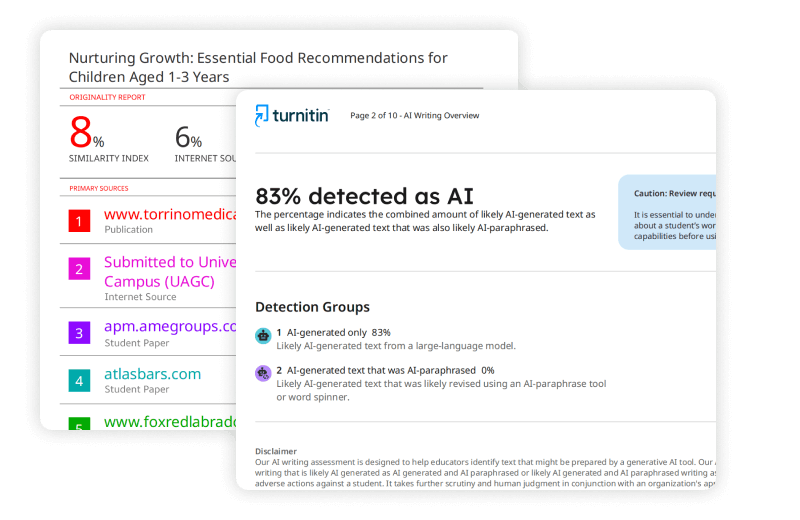
Why Your Original Work Might Trigger a Turnitin AI Flag
Getting a high AI score on your paper when you spent hours typing every word yourself feels like a punch in the gut. You did the research, you drank the coffee, and you put in the work. Then, you run a Turnitin check and see a percentage that suggests a robot wrote your essay. It is frustrating, but it is also becoming a common problem in classrooms across the globe. This phenomenon is known as a false positive, and it happens when detection software incorrectly identifies human prose as machine-generated content.
Understanding why this happens requires looking past the simple percentage on your screen. Turnitin does not actually “know” if a human wrote your paper. It uses mathematical models to guess based on patterns. If your writing style matches the patterns these models associate with large language models, you get flagged. This does not mean you cheated, but it does mean you need to understand how the system works so you can defend your work or adjust your writing style.
The stakes are high because academic integrity is the foundation of your education. A single false accusation can derail your graduation plans or damage your relationship with your professors. Because of this, knowing the mechanics behind AI detection is just as important as knowing your subject matter. We are going to break down the technical reasons for these errors and show you how to maintain a natural, human voice that passes every Turnitin score check with flying colors.
The Science of Predictability: Perplexity and Word Choice
The primary reason human writing gets flagged as AI involves a concept called perplexity. In the world of linguistics and computer science, perplexity measures how “surprised” a model is by a sequence of words. AI models are essentially giant autocomplete systems. They predict the next most likely word based on the words that came before it. If you write in a way that is highly predictable, the detector assumes a machine did the work.
Human beings often use “safe” language when they write academic papers. You might stick to common phrases or use a limited vocabulary to make sure your point is clear. While this helps with readability, it lowers the perplexity of your text. When a Turnitin check scans your work, it looks for these low-perplexity strings. If your word choices are too logical or too common, the algorithm checks the “AI” box.
Think about the difference between these two sentences. One says, “The cat sat on the mat.” The other says, “The feline perched itself atop the woven rug.” The first sentence is incredibly predictable. Almost any AI could generate it. The second sentence has higher perplexity because of the specific word choices like “perched” and “woven rug.” When you write clearly and simply, you are ironically making your work look more like it came from a chatbot.
Understanding Burstiness and Sentence Rhythm
Another major factor in AI detection is burstiness. This term refers to the variation in sentence length and structure throughout a document. Humans are naturally inconsistent writers. We might write a long, flowing sentence that explores a complex idea, then follow it up with a punchy, short statement to drive the point home. This creates a “bursty” rhythm that is difficult for early AI models to replicate.

Check before you submit. Get Turnitin Score Report in 15 Minutes.
Don't risk the 'Red' score. Get the exact same Turnitin report your supervisor uses. You will receive a full PDF similarity report including AI detection.
AI-generated text tends to be very uniform. Machines often produce sentences that are roughly the same length and use similar grammatical structures. This creates a flat, steady drone that detectors are trained to spot. If you have a habit of writing sentences that all start with “The” or “This,” or if your sentences all hover around fifteen words, you are lowering your burstiness.
When you perform a Turnitin score check, the software analyzes these rhythms. If the rhythm is too consistent, the software flags it as likely AI. To avoid this, you need to consciously vary your pacing. Throw in a short sentence. Let the next one breath a little. Use semicolons to connect related thoughts instead of just starting a new sentence every time. This natural “messiness” is a hallmark of human thought that algorithms struggle to mimic perfectly.
The Bias Against Non-Native English Speakers
One of the most troubling aspects of modern AI detection is the documented bias against English Language Learners (ELL). Researchers have found that students who speak English as a second language are significantly more likely to receive false positives. This happens because non-native speakers often rely on “safe” grammatical structures and a more restricted vocabulary to ensure they are being understood.
If you are a non-native speaker, you might avoid complex idioms or rare metaphors because you want to remain professional and clear. Unfortunately, this “clear and safe” style is exactly what AI detectors look for. Since AI models are trained on massive amounts of data to produce the most standard version of English, their output looks a lot like the writing of a very careful student.
Data from recent studies suggests that some detectors flag non-native writing as AI up to 50 percent of the time. This puts an unfair burden on international students who are doing honest work. If this applies to you, it is even more important to keep early drafts of your work. Having a digital paper trail proves that your writing evolved over time, even if the final product looks “too perfect” to a machine.
How Formatting and Templates Trigger Flags
Academic writing often requires strict adherence to specific formats. Whether you are writing a lab report, a legal brief, or a medical case study, you are likely using a template. These templates tell you exactly where the introduction goes, how to phrase your methodology, and what words to use in your conclusion. This structure is great for scientific consistency, but it is a nightmare for AI detection.
Because these templates are used by thousands of people, the language within them becomes highly predictable. Every student writing a chemistry lab report might start their methods section with the phrase “The data were collected using a…” This is a low-perplexity phrase that appears in millions of documents. When you combine these formulaic phrases with the rigid structure of a formal report, the Turnitin check starts to see patterns that look like machine output.
It is a bit of a catch-22. Your professor wants you to follow the template exactly, but following the template makes you look like a robot. To balance this, try to inject personality into the analysis and discussion sections. While the methodology might be rigid, your interpretation of the data should reflect your unique perspective. Use specific examples from your own observations to break up the “standard” academic tone.
Common Formulaic Triggers in Academic Writing
- Standardized introductory phrases (e.g., “In this essay, I will…”)
- Overused transition words (e.g., “Furthermore,” “Moreover,” “In conclusion”)
- Passive voice constructions that remove the “human” actor
- Repetitive sentence starters across multiple paragraphs
The Difference Between Similarity and AI Scores
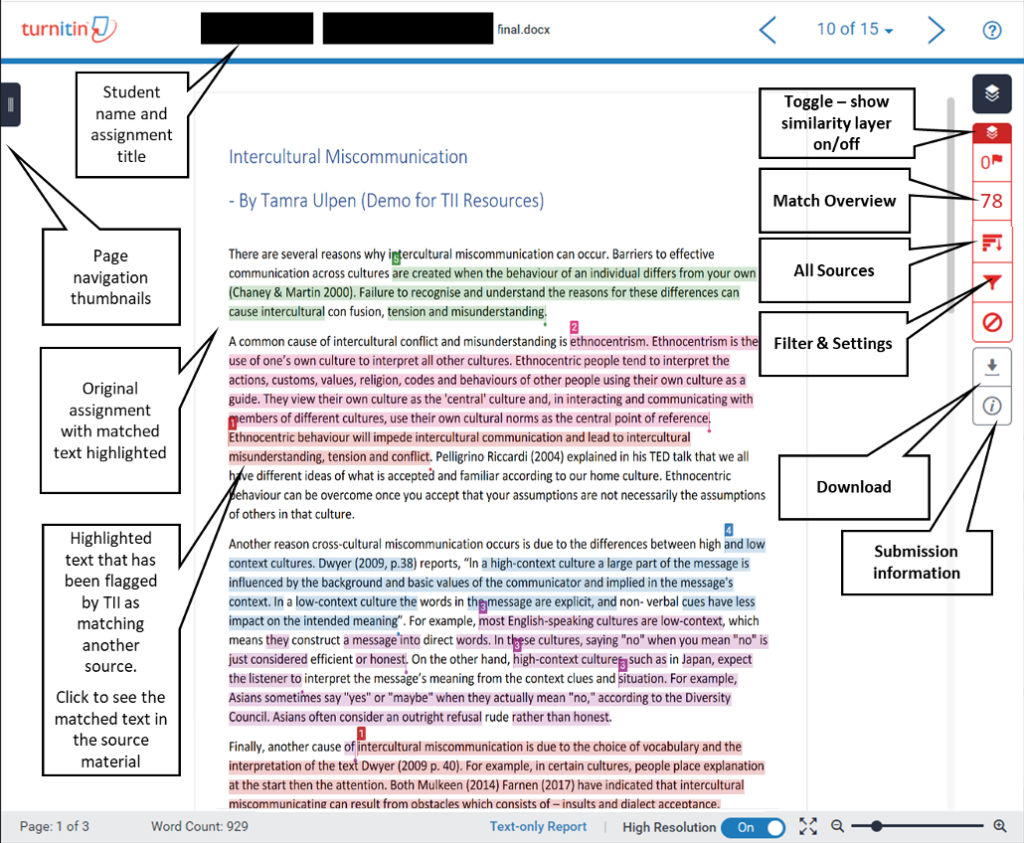
It is common to confuse the Turnitin Similarity Report with the AI Writing Indicator. They are two completely different tools that look for different things. The similarity score checks your work against a massive database of existing papers, websites, and journals. It looks for matching text to identify potential plagiarism. If your similarity score is high, it means you might have copied someone else’s words.
The AI score, however, does not look at what other people have written. It looks at the statistical properties of your own words. You could have a 0 percent similarity score (meaning your work is 100 percent original) and still get a 90 percent AI score. This happens because the software thinks your original sentences “look” like they were generated by a computer.
Understanding this distinction is helpful when you are talking to a professor about a flag. If your similarity report is low, use that as evidence of your originality. It shows that you did not copy-paste from ChatGPT or a website. You can then explain that the AI flag is a false positive based on your writing style rather than a lack of integrity. Using a professional Turnitin score check service can help you see both of these metrics before you submit your final draft.
Why Grammarly Might Be Getting You Flagged
Many students use grammar checkers like Grammarly or ProWritingAid to polish their work. These tools are helpful for catching typos and misplaced commas, but using their advanced “rewrite” features can be risky. When you click a button to “make this sentence more concise” or “improve the tone,” the software is using AI to rewrite your words.
If you let an AI rewrite half of your essay to make it sound more professional, you are essentially creating a hybrid document. The AI detector will pick up on those rewritten sections because they now follow the predictable patterns of the underlying model. Turnitin has even stated that while basic grammar checks are usually fine, the generative features of these tools will likely trigger a flag.
To stay safe, use grammar tools as a suggestion, not a command. If a tool suggests a rewrite, read the suggestion and then type the sentence yourself in your own voice. Avoid the “Apply All” button. Keeping your original phrasing, even if it is slightly less “polished,” maintains the human fingerprints that a Turnitin check needs to see to verify your work as authentic.
The Myth of the One Percent False Positive Rate
Turnitin officially claims that its AI detection tool has a false positive rate of less than 1 percent. While that sounds impressive, it is important to look at what that means in a real-world setting. If a university has 20,000 students each submitting five papers a semester, a 1 percent error rate means 1,000 papers are being incorrectly flagged every few months. That is a lot of innocent students facing potential disciplinary action.
Furthermore, independent researchers have found that the actual false positive rate can be much higher depending on the subject matter and the writer’s background. In technical fields like computer science or mathematics, the rate of error climbs because the language is naturally more limited and logical. The “1 percent” figure is often based on ideal conditions that do not reflect the diversity of student writing.
This is why many major universities have actually disabled the AI detection feature in Turnitin. They recognized that the risk of a false accusation was too high compared to the benefit of catching a few cheaters. If your school still uses it, you need to be proactive. Do not assume the software is always right just because it is a “big name” in the industry.
How to Defend Your Work Against a False Flag
If you find yourself in a situation where your paper has been flagged, do not panic. The best defense is a strong offense, which in this case means having evidence of your writing process. Most modern word processors like Google Docs or Microsoft Word have a “version history” feature. This tracks every change you made to the document over time.
Showing your professor that you started with a rough outline on Monday, added two paragraphs on Tuesday, and spent Wednesday night editing shows a clear human workflow. A robot generates 2,000 words in ten seconds; a human takes ten hours. That digital paper trail is almost impossible to fake and serves as your strongest piece of evidence.
You should also be prepared to discuss your paper in detail. If you wrote it, you know why you chose certain sources and how you arrived at your conclusions. A student who used AI often struggles to explain the nuances of their own “work.” Being able to have a knowledgeable, deep conversation about your topic will prove to any reasonable professor that the ideas came from your head, not a server farm.
Steps to Take After a False Positive Flag
- Request a meeting with your instructor immediately to discuss the report.
- Bring your draft history, research notes, and a list of sources you used.
- Ask for a manual review of the flagged sections to see if they follow a template or contain technical jargon.
- Offer to explain the core concepts of the paper verbally to demonstrate your understanding.
- If necessary, suggest using a third-party Turnitin score check to get a second opinion.
The Importance of a Pre-Submission Turnitin Check
Because the AI detection landscape is so unpredictable, you should never submit a major assignment blindly. Running your own Turnitin check before the final deadline gives you a chance to see what the professor will see. This allows you to identify sections that might be triggering a false positive and adjust your writing before it becomes a problem.
If you see a high score on your own check, you can look at the highlighted areas. Are they sections where you used a lot of technical terms? Are the sentences too uniform? You can then go back and “humanize” those sections by adding more of your own voice, varying your sentence lengths, or including more specific personal observations. This is not “tricking” the system; it is ensuring that your legitimate work is being correctly identified.
Using a service like answersfountain.com to get a detailed report is a smart move for any serious student. It gives you peace of mind and allows you to catch errors that could lead to an uncomfortable meeting with the dean. In an age where algorithms are grading your integrity, you need to be as informed as possible about the tools being used against you.
Writing for Humans First, Algorithms Second
The irony of the AI era is that we are being pressured to write in ways that please machines. However, the best way to pass an AI check is actually to write better for humans. Use stories. Use analogies. Use “messy” transitions that reflect how you actually think. Instead of saying “Furthermore,” try saying “But there is another side to this story.”
When you write with personality, you naturally increase the perplexity and burstiness of your text. You move away from the “gray” and predictable prose that AI loves. Your goal should be to make your writing so distinct that no computer could ever claim it as its own. This not only helps you pass a Turnitin score check, but it also makes you a more compelling and effective communicator.
Academic integrity is about more than just not cheating; it is about the value of your own unique voice. Do not let a flawed algorithm silence that voice or make you afraid to write clearly. By understanding the triggers for false positives and taking steps to verify your work, you can stay focused on what really matters: your education and your future.
Final Thoughts on the Future of AI Detection
AI detection technology is still in its infancy. It is likely to change significantly over the next few years as language models get better and detectors try to keep up. For now, the system is far from perfect. It is a tool, not a judge. If you are doing the work, stay confident in your process.
Remember that a high score on a Turnitin check is the beginning of a conversation, not the end of your career. As long as you have your drafts, your notes, and your knowledge, you can stand your ground. We are here to help you navigate these digital hurdles with professional reports and advice that keeps your academic record clean. Keep writing, keep being human, and let us worry about the technical side of the scores.