

Learn what a Turnitin AI flag means for your essay. We cover accuracy, false positives, and how to defend your original work effectively.
If you just finished a long night of writing only to find that your Turnitin check came back with a high AI percentage, you are likely feeling a mix of confusion and panic. It is a stressful spot to be in, especially when you know you put in the hard work. You might be asking yourself exactly what happens next and if your academic career is at risk.
The short answer is that a flag is not an automatic failing grade, but it does start a specific process. Understanding how this system works helps you handle the situation with a clear head. Turnitin does not just look for copied text anymore; it now tries to figure out if a human or a machine wrote the sentences.
The Reality of the Turnitin AI Detector Flag
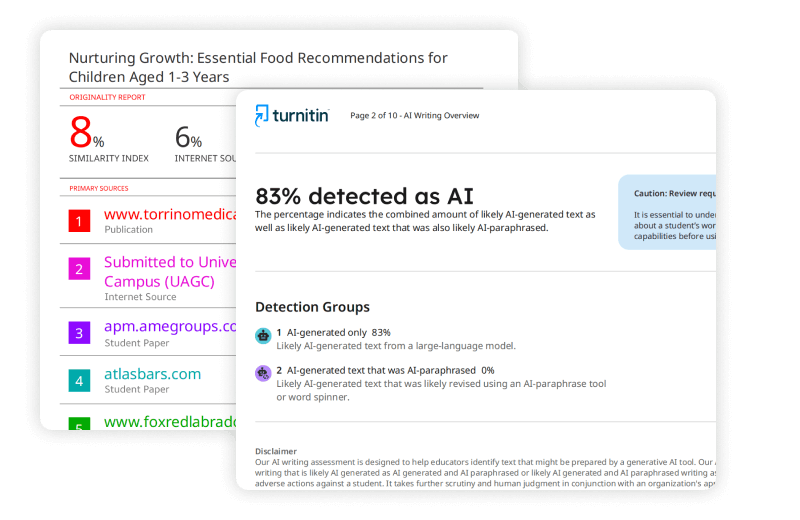
When you submit a paper, Turnitin runs it through two different systems. The first is the classic similarity report that looks for plagiarism. The second is the AI writing indicator. If the system flags your paper, it means the software found patterns that match how Large Language Models like ChatGPT or Claude structure sentences.
A high score on an AI Turnitin score check tells your professor that the writing is too predictable. Machines use probability to pick the next word in a sentence. Humans, on the other hand, are messy and unpredictable. When your writing is too clean or follows a very specific rhythmic pattern, the detector gets suspicious.
The thing is, the AI indicator is separate from the similarity score. You could have a 0% similarity score, meaning you did not copy a single word from the internet, but still have a 90% AI flag. This happens because the detector is looking for the “fingerprint” of AI logic rather than specific matching text.
Understanding the AI Similarity Score vs Plagiarism
It is helpful to separate these two concepts because your school likely treats them differently. Plagiarism is taking someone else’s ideas or words without credit. AI writing is using a tool to generate the content for you.
| Feature | Plagiarism Detection | AI Detection |
| What it finds | Matched text from databases or websites | Patterns and predictable word choices |
| How it shows | Highlighted passages with links to sources | A percentage score and highlighted “AI-like” text |
| Fixing it | Proper citations and paraphrasing | Original writing and personal voice |
| Accuracy | Very high and verifiable | High but prone to false positives |
If your Turnitin check shows high similarity, you can usually see exactly where the text came from. If it flags AI, you are dealing with a statistical guess. This distinction is your best friend if you need to defend your work.

Check before you submit. Get Turnitin Score Report in 15 Minutes.
Don't risk the 'Red' score. Get the exact same Turnitin report your supervisor uses. You will receive a full PDF similarity report including AI detection.
How Turnitin Actually Identifies AI Content
The software looks at two main factors: perplexity and burstiness. These sound like technical jargon, but they are actually quite simple concepts once you break them down.
The Role of Perplexity and Burstiness
Perplexity refers to how complex the text is. AI tends to use common word pairings. If the software can easily predict the next word you wrote, the perplexity is low, and the AI score goes up.
Burstiness refers to the variation in sentence structure and length. Humans tend to write one long, complex sentence followed by a short, punchy one. AI usually generates sentences that are all about the same length and follow the same rhythm. If your writing is too consistent, it looks like a machine did it.
Why Technical Writing Often Gets Flagged
If you are writing a lab report or a legal brief, you have to use specific terminology. There are only so many ways to describe a chemical reaction or a Supreme Court case. Because your word choices are limited by the subject matter, the perplexity stays low. This is why students in STEM and law often see higher AI scores even when they write every word themselves.
Managing filters and exclusions in the Similarity Report
Immediate Steps Your Professor Might Take
Once that flag appears on the instructor’s dashboard, they have a few choices. Most professors do not just see the number and click “fail.” They are usually told by their departments to use the AI score as a starting point for a conversation, not as absolute proof of cheating.
The Informal Chat or Vibe Check
In many cases, your professor will call you in for a quick meeting. They might ask you to explain a specific paragraph or ask about the sources you used. This is often called a “vibe check.” They want to see if the person who wrote the paper is the same person standing in front of them. If you can talk intelligently about your topic, the flag usually goes away.
Formal Academic Integrity Hearings
If the score is exceptionally high (like 90% to 100%) and you cannot explain your writing process, the school might start a formal process. This involves a committee looking at your work. They will compare your current paper to your past assignments to see if the writing style suddenly changed.
Why False Positives Happen in a Turnitin Check
False positives are the biggest headache for both students and teachers. Turnitin admits that their tool is not 100% accurate. Several things can trigger a false flag even if you are an honest student.
The Grammarly Effect and AI Assistance
Many students use Grammarly to fix their typos. However, if you use the “heavy” suggestions that rewrite entire sentences, you are essentially letting an AI rewrite your work. Turnitin often picks up on these Grammarly interventions. If you let the software change your tone or structure too much, your Turnitin score check will reflect that machine influence.
Non-Native English Speakers and Sentence Patterns
Studies have shown that students who speak English as a second language are flagged more often. This is because non-native speakers often use very formal, standard sentence structures to avoid making mistakes. These “safe” structures look exactly like the predictable output of an AI. It is an unfair reality, but knowing this can help you explain your situation to a professor.
How to Defend Your Work Against a False AI Flag
If you are facing an accusation based on an AI Turnitin check, you need to have a defense ready. Do not just get angry. Instead, bring receipts.
Keeping Your Google Docs or Word Version History
This is the most important piece of evidence you can have. If you wrote your paper in Google Docs, you have a minute-by-minute history of every word you typed. You can show that you spent four hours on the introduction, deleted sentences, and moved paragraphs around. AI content is usually pasted in all at once. Showing your version history is almost impossible to argue against.
Explaining Your Research Process
Be ready to show your notes, your browser history, and your rough drafts. If you can show the messy path you took to get to the final product, it proves that a human mind was behind the work. If you have a folder full of PDFs and scribbled notes, bring them to your meeting.
The Turnitin Score Check: What Percent Is Too High?
There is no universal “magic number” that counts as a fail. Every university sets its own rules. Some schools might ignore anything under 20%, while others might investigate anything over 10%.
Generally, a score below 15% is often seen as “noise” caused by common phrases or citations. Once you get into the 30% to 50% range, professors start looking closer. If you hit 70% or higher, you can almost guarantee a follow-up conversation.
It is also worth noting that the Turnitin score check can change over time. As Turnitin updates its model, a paper that passed last month might get flagged if you submit it again today.
Can You Bypass the AI Detector?
You will find plenty of websites claiming they can “humanize” your AI text to bypass a Turnitin check. Be very careful with these. Most of these tools just swap out words for synonyms or introduce intentional grammar errors.
The Risk of Humanizing Tools
Turnitin is aware of these “stealth” tools. They often look for the specific weird patterns these tools create. If you use an AI to write a paper and then another AI to “hide” it, you are doubling your chances of getting caught. It is much easier and safer to just write the paper yourself from the start.
Practical Tips for Reducing Your AI Score Naturally
If you want to make sure your original writing does not get flagged, focus on making it sound more human.
- Use Personal Anecdotes: AI cannot have personal experiences. If you can tie the topic to something that happened to you, the detector will know it is human.
- Vary Your Sentence Length: Follow up a long, academic sentence with a short one. This breaks the predictable rhythm that AI loves.
- Use Specific, Niche Examples: AI is great at generalities but often struggles with very specific, local, or recent examples.
- Avoid Over-Editing: If your writing is too perfect, it looks suspicious. A little bit of human “flavor” in your prose is a good thing.
What to Do If You Actually Used AI
If you did use AI and got caught, the best move is usually honesty. Professors are more likely to be lenient if you admit that you used ChatGPT for an outline or to help with a difficult paragraph. If you lie and then get proven wrong by a committee, the punishment will be much harsher.
Explain why you used it. Maybe you were overwhelmed or didn’t understand the assignment. Some professors might let you rewrite the paper for a lower grade instead of reporting you for academic dishonesty.
Frequently Asked Questions about Turnitin AI Flags
Does Turnitin check for AI in real-time?
Yes, as soon as you submit your file, the AI detection report starts generating. It usually takes a few minutes to appear alongside your similarity report.
Can Turnitin detect AI if I paraphrase it?
Often, yes. Because it looks for the logical flow of ideas and sentence structure, simply changing a few words usually is not enough to fool a modern Turnitin check.
Does my university see the AI score?
In most cases, yes. The instructor has a toggle in their view that allows them to see the AI percentage and which parts of the paper were flagged.
Is a 100% AI score always cheating?
Surprisingly, no. If you submit a very short paper that is mostly made of a long, standard quote or a technical list, the system might get confused and give it a 100% score. Context always matters.
Moving Forward with Confidence
Dealing with a Turnitin score check that flags AI is a new reality for students in 2026. The technology is far from perfect, and the rules are still being written. The best way to stay safe is to keep your drafts, use AI only as a brainstorming tool, and write with your own unique voice.
If you do get that flag, do not let it ruin your week. Prepare your evidence, stay calm, and talk to your professor. Most of the time, a honest conversation is all it takes to clear things up. Academic integrity is about the effort you put in, and as long as you can show that effort, you will be fine.
Make sure you check your syllabus for specific AI policies before you start your next assignment. Every teacher has a different boundary for what is allowed. Knowing those rules before you type the first word is the best way to avoid a stressful meeting later on.