

Turnitin has long been a trusted tool for plagiarism detection in academic institutions. But with the rise of AI writing tools like ChatGPT, it has evolved to include AI detection capabilities—and that’s where confusion, anxiety, and debate begin.
How Accurate Is Turnitin AI Detection? (Real Student Experiences)
Students across forums (especially Reddit) are asking the same urgent questions:
- “Can Turnitin really detect AI?”
- “How accurate is it?”
- “Can it falsely flag human writing?”
If you’re worried about submitting your work and being wrongly accused of using AI, you’re not alone. This guide breaks down how Turnitin AI detection works, how accurate it really is, and what real students are experiencing—so you can make informed decisions before submission.
What Is Turnitin AI Detection?
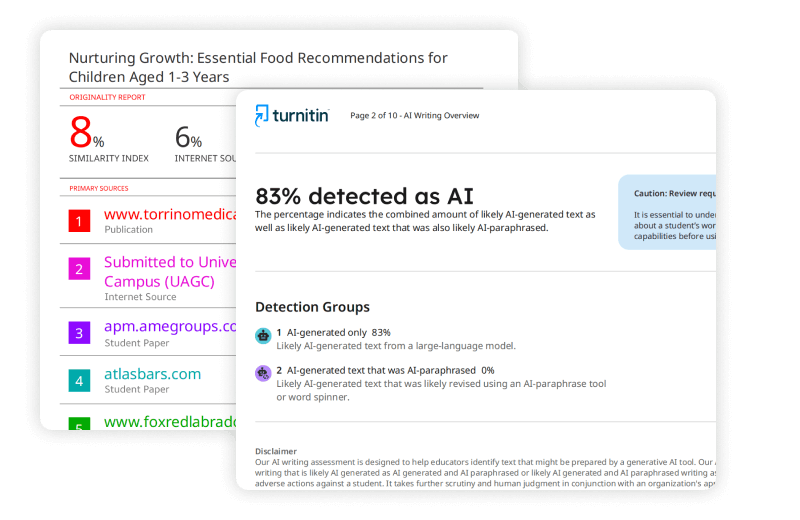
Turnitin AI detection is a feature designed to identify whether a piece of writing was generated by artificial intelligence tools. Unlike traditional plagiarism detection—which compares your work against a database—AI detection relies on pattern recognition.
It analyzes:
- Sentence structure
- Predictability of language
- Repetition and phrasing patterns
- Linguistic consistency
Instead of saying “this came from ChatGPT,” Turnitin estimates the likelihood that AI was used.
👉 Important:
AI detection is not definitive proof. It is a probabilistic model, not a fact-checking system.
How Turnitin AI Detection Works
To understand accuracy, you first need to understand the mechanism behind it.
1. Pattern Analysis
AI-generated text tends to be:
- More uniform
- Grammatically consistent
- Predictable in tone
Turnitin scans for these patterns.
2. Statistical Modeling
It compares your writing against datasets of:
- Human-written content
- AI-generated content
Then assigns an AI likelihood score.
3. Sentence-Level Detection
Turnitin may highlight specific sentences it believes are AI-generated, rather than flagging the entire document.
So… How Accurate Is Turnitin AI Detection?
Short Answer:
Moderately accurate—but far from perfect.
Long Answer:
Accuracy depends on several factors:
- Type of writing (technical vs creative)
- Level of editing
- Use of AI tools + human revision
Most experts and real-world reports suggest:
- Turnitin performs well on pure AI-generated text
- Accuracy drops significantly when text is edited or humanized
Real Student Experiences (From Reddit)
To understand real accuracy, we need to look at actual user experiences.
1. “I wrote everything myself, but it got flagged”
Many students report false positives:
“I didn’t use AI at all, but Turnitin flagged 30% AI. I was shocked.”
This highlights a major issue:
Human writing can resemble AI patterns, especially when:
- It is highly formal
- It follows structured academic language
- It lacks personal voice
2. “AI content passed with 0% detection”
On the flip side:
“I used AI, edited it, and Turnitin showed 0% AI.”
This shows:
- AI detection can be bypassed (intentionally or not)
- Edited AI content becomes harder to detect
3. “Different tools give different results”
Students often test their work using multiple AI detectors:
“Turnitin said 20%, another tool said 0%, another said 70%.”
This inconsistency proves:
👉 AI detection tools are not standardized
4. “Professors don’t always trust the AI score”
Some students report that instructors:
- Use AI scores as a warning signal, not final evidence
- Request drafts or explanations before taking action
False Positives: The Biggest Concern
A false positive occurs when Turnitin flags human-written content as AI-generated.
Why False Positives Happen
- Overly Formal Writing
Academic writing often mimics AI style:- Structured
- Neutral tone
- Predictable phrasing
- Non-Native English Writing
Students using simplified grammar may appear “AI-like.” - Repetitive Sentence Structures
Consistency can be mistaken for machine-generated text. - Technical or Scientific Writing
These often follow rigid formats—similar to AI output.
False Negatives: The Other Side of the Problem
A false negative happens when AI-written content is not detected.
This occurs when:
- AI text is heavily edited
- Personal voice is added
- Sentence structure is varied
👉 This means:
Turnitin may miss AI usage entirely, especially after human revision.
Turnitin AI Score vs Similarity Score
Many students confuse these two.
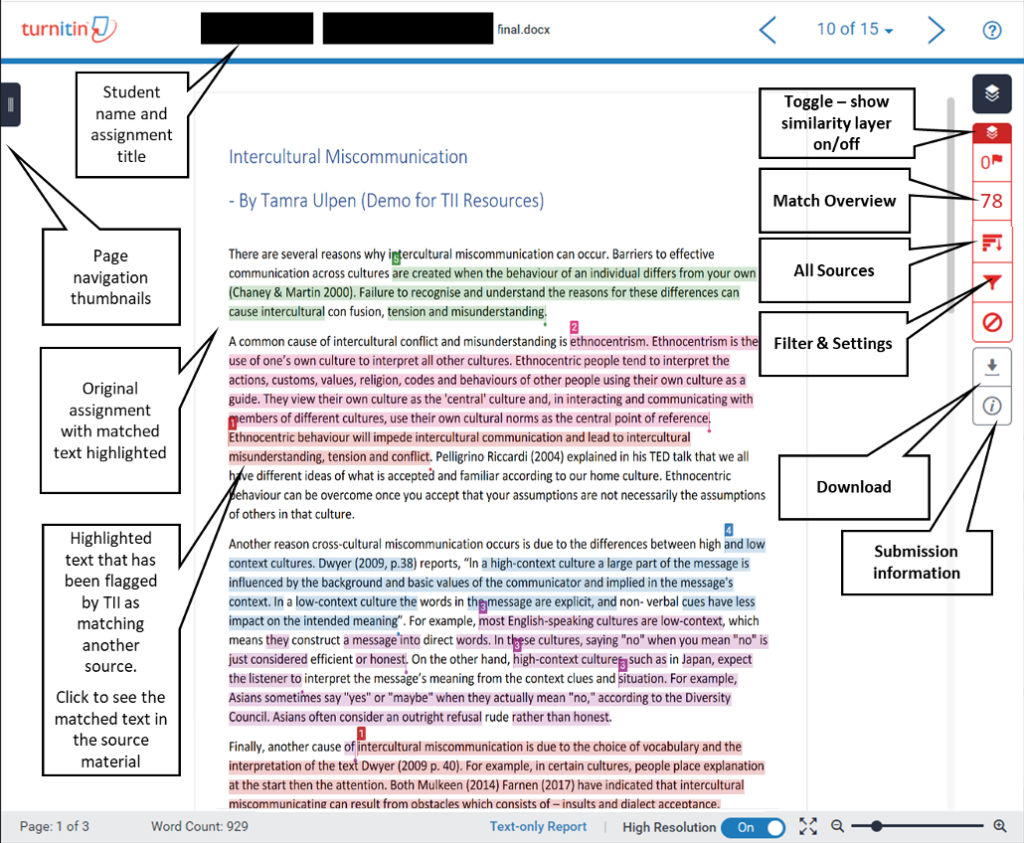
Similarity Score
- Measures overlap with existing sources
- Expressed as a percentage
- Not necessarily plagiarism
AI Detection Score
- Estimates likelihood of AI-generated text
- Based on writing patterns
👉 Key difference:
You can have:
- Low similarity + high AI score
- High similarity + zero AI score
They measure completely different things.
What Turnitin Says About Its Own Accuracy
Turnitin claims:
- Low false positive rates (often cited below 1%)
- High confidence in detecting unedited AI content
However:
- Independent verification is limited
- Real-world experiences show mixed results
👉 Important takeaway:
Even Turnitin advises that AI detection should not be used as sole evidence.
What Professors Actually See
Instructors typically see:
- AI detection percentage
- Highlighted sentences
- Similarity report
But policies vary:
- Some universities ignore AI detection entirely
- Others use it as a screening tool
👉 This means your outcome depends not just on Turnitin—but on your institution.
How to Reduce the Risk of Being Flagged
If your goal is to submit confidently, focus on improving writing quality—not “tricking” the system.
1. Add Personal Voice
- Use natural phrasing
- Avoid overly robotic tone
2. Edit Thoroughly
- Rewrite sections in your own words
- Vary sentence structure
3. Avoid Over-Reliance on AI
- Use AI for ideas, not final output
4. Break Predictable Patterns
- Mix short and long sentences
- Use varied vocabulary
Can You Trust Turnitin AI Detection?
What It Does Well:
✔ Detects fully AI-generated text
✔ Flags suspicious patterns
✔ Helps instructors identify potential issues
Where It Falls Short:
✘ False positives (human text flagged)
✘ Inconsistent results
✘ Easily affected by editing
The Reality: It’s a Risk Indicator, Not Proof
Turnitin AI detection should be viewed as:
👉 A warning system, not a final judgment
Think of it like:
- A smoke detector (alerts you)
- Not a fire investigator (proves guilt)
Should Students Be Worried?
A little caution is reasonable—but panic is unnecessary.
You’re generally safe if:
- You wrote your own work
- You can explain your ideas
- You have drafts or notes
You should be careful if:
- You rely heavily on AI-generated text
- You submit without editing
The Smart Strategy Before Submission
Students on Reddit repeatedly express one core need:
👉 They want to check their work before submitting
Because:
- Turnitin access is often restricted
- AI scores are not visible to students
Best practice:
- Review and refine your work before submission
- Use writing tools responsibly
- Ensure your content reflects your own thinking
Final Verdict: How Accurate Is Turnitin AI Detection?
Turnitin AI detection is:
👉 Helpful but imperfect
- It can detect obvious AI-generated text
- It struggles with edited or humanized content
- It sometimes flags genuine human writing
Bottom Line:
You should not rely on it as absolute truth—and neither should instructors.
Conclusion
The rise of AI detection tools has created a new layer of uncertainty in academic writing. While Turnitin aims to maintain integrity, its AI detection system is still evolving—and far from flawless.
Real student experiences show a clear pattern:
- False positives happen
- False negatives happen
- Results can vary
The safest approach isn’t to “beat the system,” but to:
- Write authentically
- Edit carefully
- Understand how detection works
That way, you submit your work with confidence—no guessing, no surprises.
Bonus: Key Takeaways
- Turnitin AI detection is pattern-based, not proof-based
- Accuracy is moderate, not perfect
- False positives are a real concern
- Edited AI content is harder to detect
- Always review your work before submission