

Learn how to avoid Turnitin AI detection in 2026 with proven, legitimate methods. Protect your work from false positives and understand what actually works.
How to Avoid Turnitin AI Detection in 2026 (What Actually Works)
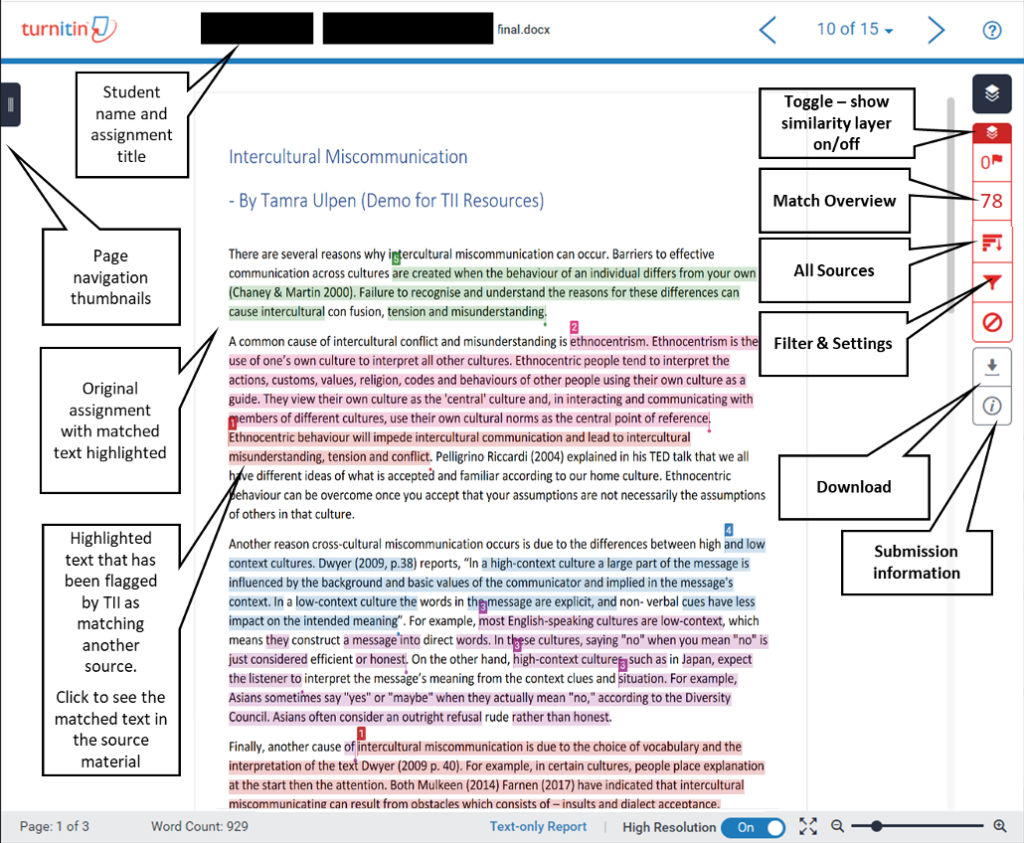
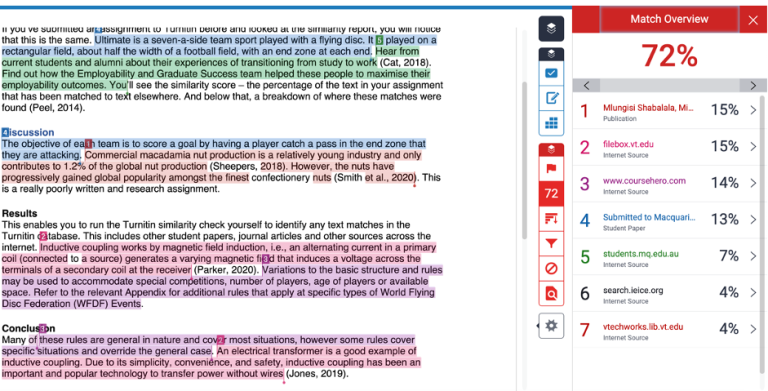
Turnitin runs two completely separate analyses on every submission. The Similarity Report compares your text against billions of web pages, academic papers, and previously submitted student work. The AI Writing Report, launched in April 2023 and heavily updated through 2025 and 2026, assigns each sentence a probability of being AI-generated. These scores are independent. You can have 0% similarity and still get flagged for AI writing, or high similarity with no AI flag at all.
According to Turnitin’s February 2026 data release, approximately 15% of essay submissions now contain more than 80% AI-generated writing, up from roughly 3% when the detector first launched. That five-fold increase is exactly why universities are paying closer attention to both scores.
Turnitin’s AI detection engine operates in three layers. First, a document-level classifier scans the entire submission and assigns an overall AI probability. Second, a segment analyzer breaks your paper into overlapping segments and scores each one individually. Third, a cross-reference layer compares statistical patterns against its database of 1.6 billion student papers. This multi-layered approach is why simple synonym swapping fails so completely, even if you fool one layer, the other two catch you.
The system looks for uniform sentence length (AI tends to produce sentences in the 15 to 20 word range consistently), low perplexity (predictable word choices), repetitive transitions like “furthermore” and “moreover,” and absence of personal voice. Paradoxically, perfect writing with no errors can look AI-generated because human writing naturally contains minor typos, comma splices, and informal language mixing with formal.
Why “Avoiding” Detection Matters Even If You Wrote Everything Yourself
Here is the part most guides skip. You might never touch ChatGPT, yet Turnitin can still flag your work. A 2023 Stanford study found that AI detectors misclassified over 61% of essays written by non-native English speakers as AI-generated. The core issue is simple: simpler vocabulary and more formulaic sentence structures, which are natural characteristics of non-native writing, overlap with the very patterns detectors associate with AI output.
Other groups hit hard by false positives include students in highly structured disciplines like scientific or legal writing, neurodivergent writers who rely on repeated phrases and consistent structures, and students who write very cleanly. Polished, well-edited prose with few errors can paradoxically trigger AI detection.
Turnitin itself admits the problem. The company suppresses exact scores below 20%, showing only an asterisk, specifically to reduce the impact of low-confidence predictions. This is an acknowledgment that the tool’s certainty weakens at lower detection levels. Vanderbilt University disabled Turnitin’s AI detector entirely, citing “concerns and unanswered questions” about accuracy. Even professors have seen their own papers score 80%+ on AI detection.

Check before you submit. Get Turnitin Score Report in 15 Minutes.
Don't risk the 'Red' score. Get the exact same Turnitin report your supervisor uses. You will receive a full PDF similarity report including AI detection.
So when we talk about how to avoid Turnitin AI detection, we are not just talking about hiding AI use. We are talking about protecting legitimate, human-written work from an imperfect system.
Method 1: Write the First Draft Yourself, Use AI Only for Research
The most reliable way to avoid any AI flag is to write your own sentences. Use ChatGPT or Claude for what they are good at: finding sources, generating outlines, explaining complex concepts, or overcoming writer’s block. Then close the AI tab and write.
If you use AI to generate a rough draft, treat it as exactly that. A rough draft. Not something to lightly edit and submit. Restructure every paragraph, change the argument flow, and rewrite every sentence in your own voice. Turnitin’s Chief Product Officer Annie Chechitelli has publicly acknowledged that the system deliberately accepts missing up to 15% of AI-written text to keep false positive rates below 1%. That gap exists, but it is not a free pass for lazy editing.
Method 2: Break Predictable Patterns in Your Paragraphs
AI writing follows templates. Humans do not. If your paragraphs all follow the same structure, introduction, body, conclusion, with identical cadence, Turnitin notices.
Practical ways to disrupt this include avoiding the same transition words across sections. Start some paragraphs with context, others with contrast, and some with direct statements. Use rhetorical questions sparingly to interrupt expected flow. Let paragraphs vary in length instead of maintaining symmetry.
Here is an example of what this looks like in practice.
Predictable AI pattern: Additionally, AI detection tools analyse sentence structure. Moreover, they rely on probability models. In conclusion, writers must adjust their style.
Human-like revision: AI detection tools do not read intent. They measure behaviour. So when structure stays neat and predictable, probability rises. That is the problem most writers run into.
The second version breaks transition repetition, alters pacing, and shifts emphasis. The meaning stays intact, but the structure no longer follows a template. Detection benchmarks consistently show that paragraph-level variation reduces confidence scores, even when content is revised multiple times.
Method 3: Vary Your Sentence Length and Structure
This is one of the most effective techniques, and it is free. AI tends to write sentences between 15 and 25 words consistently. Humans wildly vary from 5 to 35+ words.
Mix simple and complex sentences. Use fragments occasionally. Include questions. Break long sentences into two short ones, or combine two short sentences into one longer one. Change active voice to passive and vice versa.
AI version (84% detection): Social media platforms have fundamentally transformed interpersonal communication patterns. The prevalence of these technologies has generated considerable debate.
Manually rewritten (23% detection): Social media changed how we talk to each other. That’s not debatable anymore. But here’s where it gets complicated, researchers can’t agree on whether it’s good or bad.
The rewritten version uses contractions, starts a sentence with “But,” mixes short and long sentences, and includes a colloquial phrase. These are all signals of human writing.
Method 4: Inject Personal Voice and Specific Examples
AI cannot fake personal experience. Add your own interpretations of sources, critical analysis of arguments, real-world examples from your classes or life, and questions or counterarguments.
Instead of writing “Research shows that climate change impacts are accelerating,” write “The data from last semester’s environmental science lab actually surprised me. When we tracked local temperature shifts over five years, the trend was steeper than I expected.”
Specific details, course references, and personal reactions are nearly impossible for AI to generate accurately, and they signal authentic human authorship to both Turnitin and your professor.
Method 5: Use Citations Strategically
Papers with 15 or more citations averaged 24% AI detection scores versus 67% for papers with under 5 citations. Quoted material is not analyzed for AI patterns. Citations force unique phrasing around them. And they demonstrate genuine research.
Do not just drop quotes in randomly. Integrate them into your argument. Explain why the quote matters. Connect it to your thesis. This creates natural variation in your text because the cited material breaks up any AI-generated patterns in your own prose.
Method 6: Edit in Multiple Sessions Over Several Days
Your brain processes text differently when you step away from it. Write your draft, then wait a day before editing structure, another day for sentence-level revisions, and a third day for voice and tone.
This multi-session approach naturally introduces variation that looks human. You will catch repetitive transitions, stiff phrasing, and uniform sentence lengths that you missed in a single sitting. It also gives you time to add those personal insights and specific examples that make writing authentically yours.
Method 7: Use Professional Humanization Tools When Necessary
Sometimes you have already written something, or you used AI for a legitimate first draft, and you need to bring the AI score down before submission. In those cases, professional humanization tools can help.
These tools do not just swap synonyms. They perform semantic reconstruction, completely rebuilding text at the meaning level so the output has genuinely different statistical properties. A paraphraser changes the surface; a humanizer changes the structure. Turnitin needs the structure to change.
Testing across 200+ academic documents showed that raw ChatGPT content scored between 92% and 100% AI on Turnitin. Content processed through basic paraphrasers like QuillBot still scored 55-72%. Only tools performing deep semantic reconstruction consistently dropped scores below 15%.
However, no tool is 100% guaranteed. Smart students always verify before submitting. Run the humanized output through a secondary detector, review it manually for meaning accuracy, and fix anything that sounds unnatural.
What Does NOT Work in 2026
Let us be direct about the methods that waste your time.
- Synonym swapping. Turnitin’s segment analyzer still detects the underlying sentence patterns. Changing “important” to “significant” does not change statistical signatures.
- Adding a few personal anecdotes. Turnitin scores each segment independently. A human-written intro does not help if the body paragraphs are still AI-generated.
- Mixing AI and human writing. Turnitin highlights AI-flagged segments individually. Your professor sees exactly which paragraphs scored high, even if the overall score is moderate.
- Using multiple AI models. Switching between ChatGPT, Claude, and Gemini does not help. Turnitin detects all major language models.
- Translating back and forth. Some guides suggest translating to another language and back. This destroys meaning, introduces grammar errors, and still gets flagged roughly 70% of the time.
- Adding typos on purpose. Turnitin does not check for spelling errors. It analyzes statistical patterns. Deliberate mistakes just make you look careless.
How to Check Your Work Before Submission
Do not let your professor’s Turnitin report be the first time you see your scores. Run your own checks first.
- Check your citations. Every idea, data point, or argument from an external source needs a citation. Missing citations are the number one cause of avoidable similarity flags.
- Run a plagiarism check yourself. Tools like Quetext or similar services can catch issues before submission.
- Review your paraphrasing. Go through each section where you reference a source and ask: if I showed this paragraph alongside the original, would someone see clear structural similarity? If yes, rewrite it.
- Check your AI footprint. Look for uniform sentence length, excessive hedging language like “it is important to note that,” repetitive transitions, and perfectly balanced perspectives with no personal stance.
- Save your process. Keep your notes, outlines, drafts, and revision history. If you are ever questioned, being able to show a clear writing process is your strongest defense.
- Read your work out loud. If a passage sounds generic, robotic, or unlike how you would explain the concept to a friend, rewrite it until it sounds like you.
Understanding Your Turnitin Score Check Results
When you run a Turnitin check, you get two numbers. The similarity percentage and the AI writing percentage. Here is what they actually mean.
A 15% similarity score does not mean 15% of your paper is plagiarized. It means 15% of your text matches something in the database, which could include properly cited quotes, common phrases, or standard terminology in your field.
For AI detection, Turnitin uses these general ranges: 0-24% is considered likely human, 25-49% is uncertain and usually triggers no action, 50-79% is probable AI and triggers review, and 80-100% is highly likely AI and gets investigated. However, individual institutions set their own thresholds. Some schools act on scores above 20%, others apply higher bars or review flagged work case by case.
Turnitin explicitly recommends against using the score alone as evidence, treating it instead as a signal that warrants closer human review alongside the student’s writing history.
What to Do If You Get Falsely Flagged
If Turnitin flags your genuinely human-written work, do not panic. Gather your drafts, notes, outlines, and any version history that shows your writing process. Request a meeting with your instructor to review the report together. Point to specific sections and explain your reasoning or sources. If needed, use your institution’s formal appeals process.
Most universities have a review mechanism, and Turnitin itself states that its AI scores “should not be used as the sole basis for adverse actions against a student.” You can also cite independent research showing 61% false positive rates for non-native English speakers and 17-22% false positive rates overall to challenge the tool’s validity.
Final Thoughts
The goal is not to trick Turnitin into passing dishonest work. It is to understand how the system works so you can write authentically, protect your legitimate work from false positives, and use AI tools responsibly when your institution allows them.
Turnitin is wrong nearly half the time on borderline cases. Its 4% sentence-level false positive rate means 1 in every 25 sentences written by humans gets wrongly flagged. For ESL students, the odds are 2-3 times worse. Knowing how to avoid Turnitin AI detection is as much about protecting yourself from an imperfect system as it is about any writing strategy.
Write in your own voice. Vary your structure. Cite your sources. Save your drafts. And if you need to bring an AI score down before submission, use methods that actually change the underlying patterns, not surface-level tricks that waste your time.