

Learn how to reduce Turnitin similarity score quickly with proven methods. Lower your Turnitin check percentage and fix AI detection flags effectively.
How to Reduce Turnitin Similarity Score Quickly: Proven Methods
Understanding the Turnitin Similarity Report Before You Panic
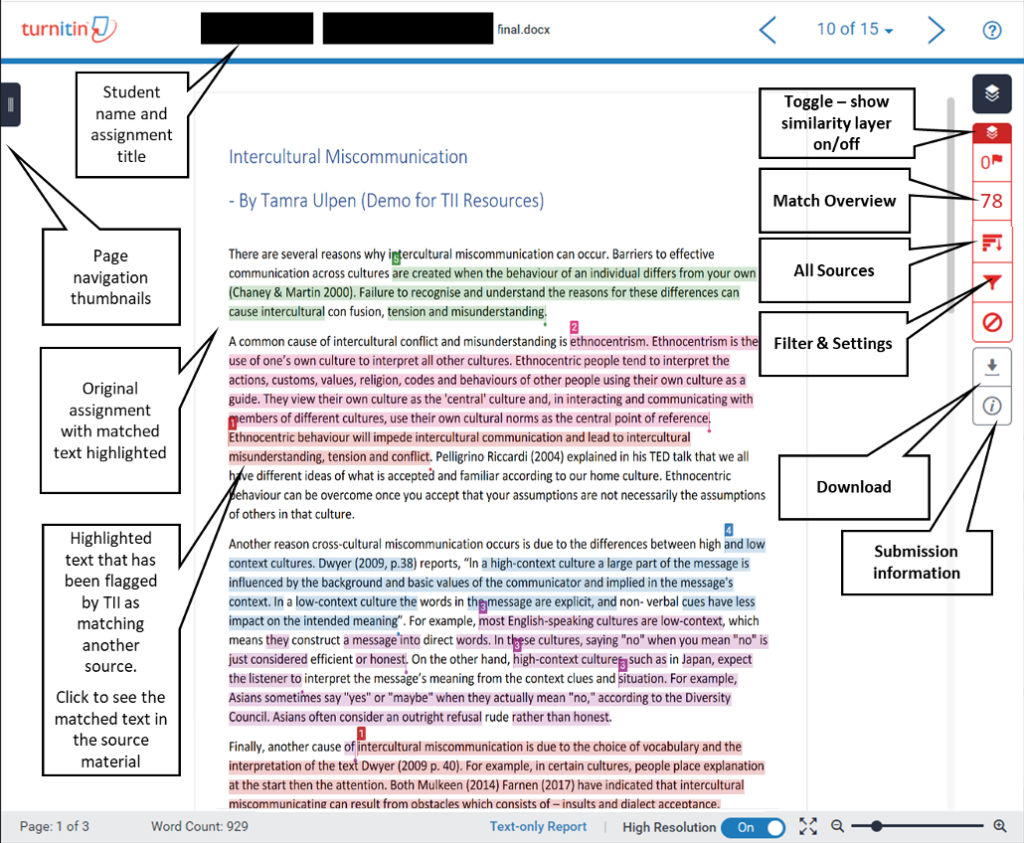
Seeing a high percentage on your Turnitin check can feel like a punch to the stomach. You might have spent days researching and writing, only to find the report glowing with colorful highlights. Before you start deleting everything, you need to understand what that number actually represents. Turnitin does not technically detect plagiarism. It identifies text matches. A high similarity score simply means your writing overlaps with other documents in the database. This could be due to common phrases, long titles, or correctly cited quotes.
The goal is to lower that percentage while keeping the academic integrity of your work. Most universities have a “safe” threshold, often between 10% and 20%, but this varies. If your report shows 40% or 50% similarity, you have some work to do. Luckily, you can fix this without rewriting your entire paper from scratch. The process involves a mix of structural changes, better source management, and a deeper understanding of how the Turnitin check works in 2026.
How to Reduce Turnitin Similarity Score Quickly: Proven Methods
If you need to lower your score in a hurry, you cannot just swap synonyms. Modern algorithms are too smart for that. Instead, you need to change how you approach the text. Here is how you can start seeing a drop in that percentage immediately.
1. Paraphrase at the Structural Level
Most students make the mistake of “patchwriting.” This is when you take a sentence and change three or four words while keeping the exact same sentence structure. Turnitin sees right through this because the “skeleton” of the sentence remains the same.
To really reduce the similarity score, you need to dismantle the sentence. Read the original source, look away, and explain the concept out loud. Then, write down what you just said. Usually, your natural speaking voice uses different grammar than a textbook.
Example of Structural Rewriting:
- Original: “The implementation of renewable energy sources has seen a significant increase in the last decade due to falling costs.”
- Poor Paraphrase: “The use of green energy types has seen a big rise in the past ten years because of lower prices.” (This will still trigger a match).
- Strong Paraphrase: “Costs for sustainable energy have dropped so much lately that more countries are switching over to it than ever before.”
2. Use the “Quote and Cite” Strategy Correctly
Sometimes, you cannot change the wording because the original author said it perfectly. In those cases, do not try to paraphrase. Just quote them. However, quotes still show up in the similarity report. While most instructors set Turnitin to “exclude quotes,” the raw score might still look high if you do not check those settings.

Check before you submit. Get Turnitin Score Report in 15 Minutes.
Don't risk the 'Red' score. Get the exact same Turnitin report your supervisor uses. You will receive a full PDF similarity report including AI detection.
If your score is high because of quotes, make sure you are using quotation marks properly. Turnitin identifies anything between double quotes and can filter it out. If you have block quotes (longer than 40 words), format them according to your style guide (APA, MLA, or Harvard). This tells the software, and your professor, that you are not stealing the words; you are analyzing them.
3. Synthesize Multiple Sources
One of the biggest triggers for a high similarity score is “source mirroring.” This happens when you rely too heavily on one article for a paragraph. Turnitin will highlight that entire section because it matches one specific URL.
To break this up, try synthesis. Instead of summarizing Author A, then Author B, try to explain how they agree or disagree in the same sentence. When you mix ideas from three different papers into one paragraph, the similarity percentage for any single source drops significantly.
| Method | Why It Works | Effort Level |
| Synonym Swapping | It doesn’t work well anymore. | Low |
| Sentence Flipping | Changing active to passive voice (or vice versa) breaks the pattern. | Medium |
| Structural Paraphrasing | Completely changes the “DNA” of the sentence. | High |
| Synthesis | Blends multiple sources to create a unique narrative flow. | High |
Mastering the Turnitin Check for AI Detection
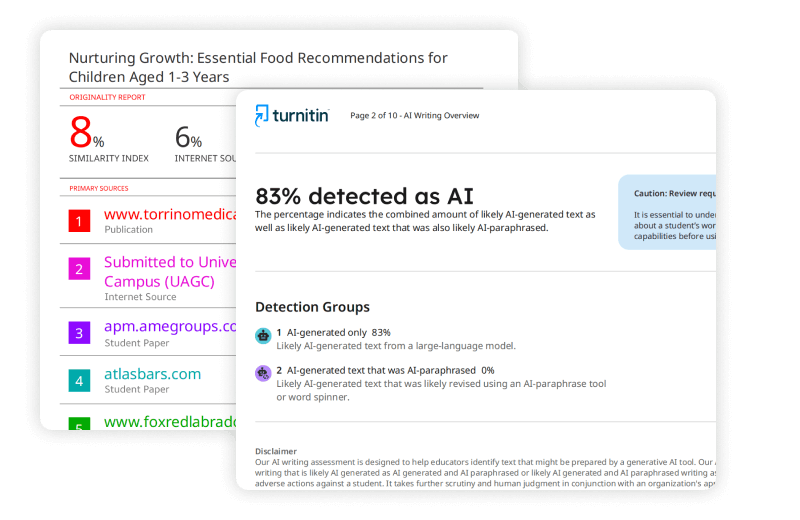
The academic landscape changed when AI detection became part of the standard Turnitin report. Now, you don’t just have to worry about matching text from the internet; you have to worry about your writing “looking” like it was generated by a machine. Even if you wrote every word yourself, if your sentences are too rhythmic or predictable, the AI detection tool might flag you.
Why Original Writing Gets Flagged as AI
AI models work by predicting the next most likely word. This results in writing that is very “average.” It lacks what linguists call “burstiness” and “perplexity.” Humans tend to write a long, complex sentence followed by a short, punchy one. AI tends to keep every sentence roughly the same length.
To avoid AI detection flags during your Turnitin check:
- Vary your sentence length. Use a mix of compound sentences and simple statements.
- Add personal anecdotes. AI cannot easily replicate a specific personal experience or a localized example from your own life.
- Use transitions that feel natural. Avoid robotic transitions like “Furthermore” or “In conclusion” at the start of every paragraph. Try “More importantly,” or “This leads us to a bigger problem.”
Humanizing Your Text Manually
If you used a tool to help brainstorm or outline, the final draft must sound like you. One way to do this is to read your work out loud. If you find yourself running out of breath, the sentence is too long. If it sounds like a list of facts, it is too dry. Adding “flavor” words or specific adjectives that a machine wouldn’t think to use can help.
Actually, the best way to beat AI detection is to show your work. Keep your old drafts. If a professor questions your score, showing them your outline and the evolution of your thoughts is the best defense you can have.
How to Handle the “Small Matches” Problem
Sometimes your Turnitin report is full of tiny highlights. Three words here, four words there. Usually, these are common academic phrases like “the results of the study indicated” or “based on the available evidence.” These are not plagiarism, but they add up.
If you have a lot of these, you can ask your instructor to set the Turnitin filters to “Exclude small matches.” Most teachers set this to exclude matches under 8 or 10 words. If they haven’t done this, your score will look much higher than it really is. You can try to rephrase these common clichés to something more original, though it is often better to just focus on the long, colorful blocks of text.
Using Turnitin Exclusions to Your Advantage
The “raw” score you see is often a “worst-case scenario.” You can often lower the score significantly just by using the filters available in the report view.
Exclude Bibliography and References
References are meant to match other papers. If you are citing a popular study, every other student in your field is citing it too. This will cause your bibliography to light up like a Christmas tree. Make sure the “Exclude Bibliography” filter is turned on. This can sometimes drop a score from 30% down to 12% instantly.
Exclude Quotes
As mentioned earlier, if you have quoted properly, these shouldn’t count against you. Turn on this filter to see your “true” similarity score. This is the number that actually reflects your own writing. If the score is still high after excluding quotes and the bibliography, then you have a genuine paraphrasing issue that needs attention.
Common Mistakes That Make the Score Worse
In a desperate attempt to reduce Turnitin similarity score quickly, many students turn to “hacks” they find online. Most of these do not work anymore and can actually get you in more trouble for “academic malpractice.”
- Replacing Characters: Some people replace the letter ‘e’ with a Greek character that looks identical. Turnitin now flags “hidden characters” or “replacement text.” It won’t lower your score; it will just alert the professor that you tried to cheat the system.
- Adding White Text: Putting invisible, original text in the margins to dilute the percentage is an old trick. Turnitin now strips away text formatting, so the invisible words become visible to the grader.
- Spinning Tools: Using cheap “article spinners” creates gibberish. The grammar becomes so poor that while the similarity score might drop, the quality of your paper will fall apart.
Instead of these tricks, focus on the logic of your writing. If you understand the topic well enough to explain it to a friend, you can write it in a way that Turnitin won’t flag.
How to Pre-Check Your Work Safely
You might want to run your own Turnitin check before submitting the final version. Be careful here. Some “free” plagiarism checkers online actually save your paper to their own database. When you finally submit your assignment to your school, it will match the version you uploaded to the free site, resulting in a 100% similarity score.
Always use a “non-repository” check if possible. Many universities provide a “practice” link where you can upload your paper to see the report without it being saved to the global database. If your school doesn’t offer this, look for reputable services that specifically state they do not store your files.
Practical Steps for a Rapid Revision
If you have an hour before your deadline and your score is too high, follow this checklist to fix it fast:
- Identify the “Hot Spots”: Look for the longest highlighted blocks in the report. These are the ones killing your score. Ignore the tiny 1% matches for now.
- Rewrite the Opening and Closing of Paragraphs: Often, the middle of a paragraph contains the technical data, while the beginning and end are your analysis. Making these parts more “human” and original helps break up the match pattern.
- Change the Order of Ideas: If you are following the exact flow of a source, swap the points. If the source says “X leads to Y which causes Z,” try writing “Z is often the result of Y, which is triggered by X.”
- Use Semicolons and Periods to Break Up Matches: Sometimes simply splitting a long, matched sentence into two shorter ones is enough to confuse the matching algorithm.
- Check Your Citations Again: A missing citation might be the only reason a match is being counted as a problem rather than a legitimate reference.
The Role of AI in Writing Today
We are in an era where AI is a tool, not just a shortcut. Using it to help structure an outline or explain a complex concept is fine for many, but the final prose must be yours. The AI detection in Turnitin is looking for the “fingerprint” of a machine. That fingerprint is consistency.
Human writing is messy. We use odd words sometimes. We vary our rhythm. We have a specific “voice.” If you find that your writing is being flagged as AI, it might actually be because you are trying too hard to sound “academic” and “perfect.” Loosen up your style a bit. Use a more direct, personable tone. Not only will this help you pass the AI detection check, but it also usually makes for a much more interesting paper to read.
Summary: Keeping Your Score Low for Good
Reducing your Turnitin similarity score is about clarity and original thought. It isn’t about hiding things or playing games with the software. The software is just a mirror reflecting how much of your work relies on the words of others.
By focusing on structural paraphrasing, smart synthesis, and varying your sentence rhythm to stay “human,” you can consistently keep your scores in the green zone. Always remember to check your exclusions and avoid the temptation of “quick fix” tricks that can ruin your academic reputation. Keep your writing honest, keep your citations accurate, and the Turnitin report will stop being a source of stress.
Actually, once you get the hang of these techniques, you will find that your overall writing quality improves. You aren’t just lowering a number; you are becoming a better communicator. That is the real goal of any academic assignment anyway. So, take a deep breath, look at those highlights, and start rewriting with confidence. You have the tools to fix this.
Quick Reference Table: Turnitin Report Colors
| Color | Percentage Range | Meaning |
| Blue | 0% | No matching text found. |
| Green | 1% to 24% | Standard range for most academic papers. |
| Yellow | 25% to 49% | Likely needs some minor revision or exclusion checks. |
| Orange | 50% to 74% | High similarity; needs significant paraphrasing. |
| Red | 75% to 100% | Severe overlap; usually indicates a major problem. |
By following these methods, you can move your paper from the “Yellow” or “Orange” zones down to a safe “Green” or “Blue” quickly and effectively. Stick to the proven methods, and your Turnitin check will be one less thing to worry about.