

Most students should aim for 10-15% similarity on Turnitin. Scores under 25% are generally acceptable with proper citations, but context matters more than the number. A 25% score with well-distributed, cited sources beats a 12% score concentrated in one uncited source. Use the color codes (green, yellow, orange, red) as quick guides, but always review your full report.
What Is a Turnitin Score and How Does It Work
Understanding the Turnitin Similarity Score
A Turnitin similarity score shows what percentage of your submitted text matches content in Turnitin’s massive database. That database holds over seven trillion matches, including web pages, academic journals, books, and previously submitted student papers from thousands of institutions .
The calculation is simple math: matched words divided by total words, multiplied by 100. Submit a 1,000-word essay with 200 matching words, you get 20% similarity. But here’s what trips students up: the score measures text overlap, not plagiarism . Turnitin flags matching text so you and your instructor can examine it. The software makes no judgment about whether you did anything wrong.
This distinction matters because plenty of legitimate things inflate your score. Properly cited direct quotes still register as 100% matches. Your reference list matches thousands of other papers using the same citation format. Standard academic phrases like “the results suggest” or “further research is needed” appear in millions of papers and trigger minor matches . Even a paper written entirely from scratch with zero sources typically scores 10-12% from this background noise alone .
| What Turnitin Detects | What It Means | Academic Risk |
|---|---|---|
| Identical text matches | Word-for-word overlap | Could be proper quote or copying |
| Similar text patterns | Restructured but recognizable source material | Often indicates poor paraphrasing |
| Self-matches | Your own previous submissions | Usually legitimate, but check policy |
| Bibliography matches | Standard citation formats | No risk; common for all papers |
Table 1: Types of matches in Turnitin reports
The comparison process works by breaking your document into small text strings, typically 5-8 words, and searching for matches across all database categories simultaneously. Turnitin’s algorithms have grown sophisticated enough to catch synonym substitution and sentence restructuring that earlier systems missed . The student paper repository is particularly powerful; it identifies recycled assignments across institutions and years, catching material that web-only checkers completely miss .
The Turnitin Score Checker Process
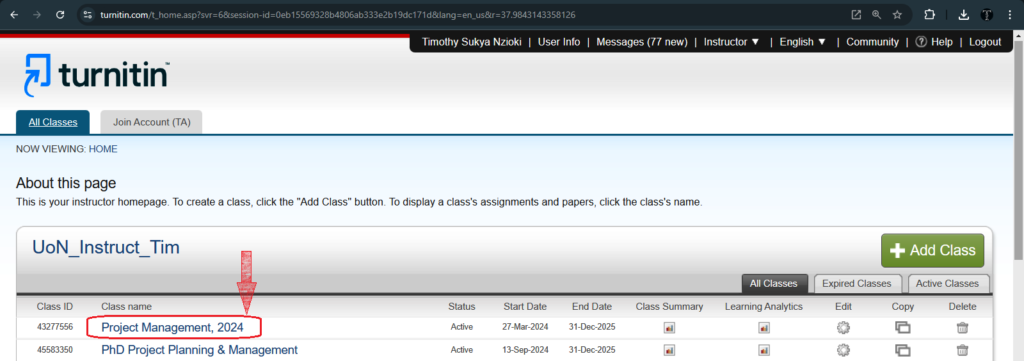
Getting your similarity report follows a predictable path, though details vary by your institution’s setup. Most students access Turnitin through their learning management system: Canvas, Blackboard, or Moodle. Your instructor creates an assignment portal where you upload your document.
Supported formats include .doc, .docx, .pdf, .txt, .rtf, and sometimes HTML. Scanned PDFs without OCR text layers often fail or delay processing. Password-protected files and corrupted documents get rejected outright. Before submitting, check your file: unusual fonts, embedded images, or non-standard encoding can cause problems .

Check before you submit. Get Turnitin Score Report in 15 Minutes.
Don't risk the 'Red' score. Get the exact same Turnitin report your supervisor uses. You will receive a full PDF similarity report including AI detection.
Processing usually takes minutes, but stretches to hours during peak periods like end-of-semester deadlines. You’ll see a confirmation immediately, with the percentage appearing once analysis completes. If your instructor enabled student viewing, click the percentage or a “View” button to open your full report .
Some key technical details affect your experience:
- Resubmission delays: Submit three times within 24 hours, and subsequent reports take 24 hours to generate (or appear on the due date, whichever comes first) . This prevents rapid tweaking to game scores.
- No score displayed: Either still processing, or your instructor disabled student access (shown as a paper icon with a line through it) .
- Self-matching: Your previous submissions stay in Turnitin’s database. Resubmitting revised work matches against your earlier version; this is normal and filterable.
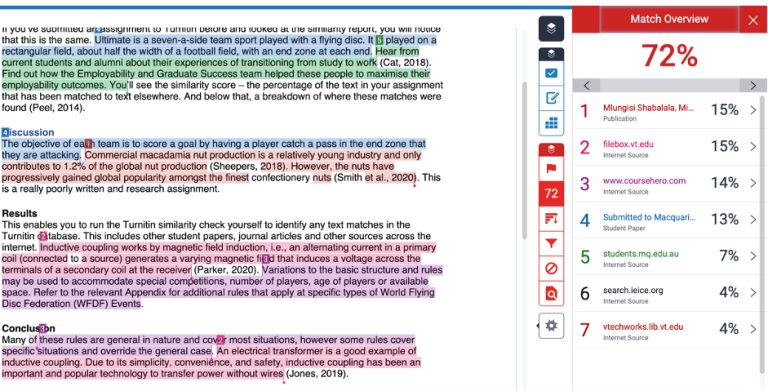
The full Similarity Report opens in Feedback Studio, showing your document with color-coded highlights and a sidebar listing every matching source. Click any match to see your text side-by-side with the original. This granular view is where real understanding happens.
Interpreting Your Turnitin Similarity Score
Turnitin Score Meaning and Context
Percentages alone mislead. The same 25% score means radically different things depending on what’s behind it. A literature review with 25% similarity from 40 properly cited sources demonstrates comprehensive research. A personal reflection with 25% from two uncited websites suggests serious problems. Source distribution beats total percentage every time .
| Scenario | 25% Score Composition | Verdict |
|---|---|---|
| Literature review | 40 sources at 0.5-1% each, all cited | Excellent scholarship |
| Research paper | 5 sources at 5% each, mixed citation | Needs review, likely acceptable |
| Opinion essay | 2 sources at 12% each, minimal attribution | Problematic, requires revision |
| Lab report | Standard methodology descriptions | Normal for discipline |
Table 2: Same percentage, different meanings
Proper citation transforms interpretation. Direct quotes with quotation marks, in-text citations, and complete references are legitimate academic practice. They still add to your similarity score. A well-cited paper with 35% similarity can receive full credit; a 5% paper with one uncited paragraph can trigger academic integrity proceedings. The difference is attribution and intent, which Turnitin cannot measure .
Assignment type shapes expectations dramatically:
- Literature reviews, legal analyses, textual studies: Higher similarity expected (20-40%+) from extensive quotation
- Original research, empirical studies: Moderate similarity (10-25%) from methodology and prior work citation
- Personal reflections, creative writing, opinion pieces: Lower similarity expected (under 15%)
- Technical/scientific reports: Variable; standardized language creates baseline matches
When evaluating your score, ask: What kind of paper is this? What sources contributed? How are they integrated? The answers matter more than the number.
Turnitin Color Codes Explained
Turnitin’s color system offers quick visual orientation. Know the ranges and what they signal.
| Color | Range | What It Means | Typical Response |
|---|---|---|---|
| Blue | 0% | No matches found | Unusual; verify document processed correctly |
| Green | 1-24% | Low similarity | Most common; generally acceptable with citation check |
| Yellow | 25-49% | Moderate similarity | Review source distribution and citation quality |
| Orange | 50-74% | High similarity | Significant concern; substantial revision usually needed |
| Red | 75-100% | Very high similarity | Major issues; near-complete rewrite typical |
*Table 3: Official Turnitin color coding *
What does green mean on Turnitin? Green (1-24%) covers most legitimate academic work. But don’t relax completely. Up to 24% of your paper could still be uncited copying; the color only measures match volume, not quality . Review your report even in green.
Yellow (25-49%) demands attention. Many institutions use 25% as a formal review threshold . Papers here aren’t automatically problematic, but they’re scrutinized more closely. Check: Is your similarity distributed across many sources? Are your highest single-source matches under 5%? Is everything properly cited? Yellow means verify, not panic.
Orange and red indicate structural problems. Half or more of your text matches existing sources. Legitimate explanations exist (required extensive quotation, standardized forms, technical documentation), but they’re uncommon. Most papers here need major revision or represent serious misconduct.
Specific Percentage Interpretations
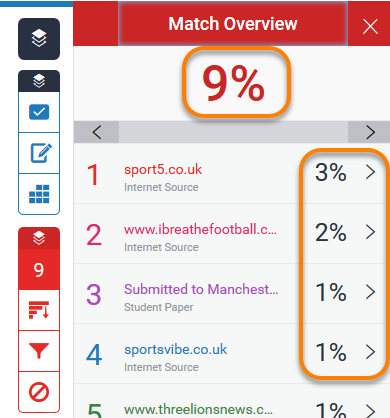
Is a 9% Turnitin score okay? Yes. Nine percent sits comfortably in the green zone and represents typical original work. Your matches likely comprise common phrases, citation formats, and minimal necessary quotation. Only concern: if this is a research-heavy assignment requiring extensive source engagement, 9% might suggest insufficient literature review .
Is 10 similarity on Turnitin bad? Not at all. Ten percent is squarely normal. Most writing centers consider 10-15% the standard range for well-crafted academic work . Your paper balances original analysis with appropriate source use. Verify your source distribution, then move on.
Is 12% on Turnitin too high? No. Twelve percent aligns with empirical findings: completely original essays score ~12% from unavoidable academic prose patterns . You’re in safe territory. Check that no single source dominates, then submit with confidence.
Is 20% on Turnitin okay? Context-dependent. For research papers with substantial quotation needs, 20% is acceptable. For personal reflections, it’s high. The key question: Is your 20% distributed across many cited sources or concentrated in a few? Twenty percent from 15 sources at 1-2% each differs completely from 20% from 3 sources at 6-7% each .
25 Turnitin score: borderline considerations. Twenty-five percent sits at the green-yellow boundary and triggers heightened scrutiny at many institutions . This isn’t automatic trouble; literature reviews and quotation-intensive disciplines often land here legitimately. But you must examine your report immediately. Check source distribution, verify all quotations are marked and cited, confirm paraphrases include attribution. Some universities explicitly flag 25% for mandatory review; know your institution’s policy.
Is 25% on Turnitin too high? Depends entirely on context. For a doctoral dissertation chapter reviewing extensive literature, 25% might be expected. For a freshman composition personal narrative, it’s extraordinarily high. The percentage isn’t the problem; the pattern is. Distributed, cited matches at 25% can be fine. Concentrated, uncited matches at 25% require revision. When uncertain, proactive communication with your instructor demonstrates responsibility.
Is 36% similarity on Turnitin bad? Thirty-six percent raises substantial concerns. This falls in yellow-orange territory where most instructors require explanation or revision . Legitimate explanations exist: extensive required quotations, very large bibliographies, self-matching, standardized disciplinary language. But they’re uncommon. Match-by-match analysis is mandatory. Identify largest sources, verify citations, rewrite concentrated sections. Prepare to discuss or revise.
What Is an Acceptable Turnitin Score
Institutional Variations and Policies
No universal standard exists. Every institution, department, and sometimes individual instructor sets their own thresholds . Published policies vary dramatically:
| Institution Type | Typical Threshold | Notes |
|---|---|---|
| Most universities | 20-25% | Flag for manual review above this range |
| Prestigious/research-intensive | 10-15% | Stricter originality expectations |
| Graduate programs | 10% or lower | Higher contribution standards |
| Discipline-specific (law, literature) | 30-40%+ | Quotation-intensive by design |
Table 4: Institutional threshold variation
Some schools publish explicit numbers; others deliberately avoid them to emphasize case-by-case evaluation. Your course syllabus, academic integrity policy, or direct instructor inquiry provides the only reliable guidance .
Discipline-based differences are substantial and rational. Legal writing requires extensive statutory and case quotation. Literary analysis quotes primary texts by convention. Scientific methodology descriptions use standardized language. These fields tolerate higher baseline similarity. Creative writing, personal reflection, and original data analysis expect lower scores.
Undergraduate versus postgraduate expectations shift toward stricter originality. Master’s and doctoral work emphasizes contribution to knowledge, meaning extensive matching against existing sources undermines core purpose. However, dissertation literature reviews may legitimately exceed typical coursework thresholds due to required source density.
Baseline Scores and Common Scenarios
Typical scores for original work: 10-15% . This band accommodates necessary quotation, standard phrases, reference citations, and incidental matches without indicating problems.
When low scores raise concerns: Paradoxically, 0-5% similarity can be suspicious. Genuine academic writing almost always matches something. Standard terminology, citation formats, and common transitions create baseline overlap. Near-zero scores may indicate: no research foundation, sources outside Turnitin’s database, or artificial processing to evade detection . Some instructors specifically question unexpectedly low scores.
High scores with proper citation present complex evaluation. A 40% paper with entirely attributed direct quotes, clear analytical framing, and original conclusion may receive full credit. The similarity percentage measures text matching, not intellectual contribution. Instructors evaluate whether quotation serves legitimate analytical purposes and whether your voice provides coherent structure.
How to Read Your Turnitin Similarity Report
Report Components and Features
Your report contains multiple analytical layers. Understanding each prevents misinterpretation.
Overall similarity percentage: The headline number. Treat this as orientation, not conclusion. It aggregates all matches regardless of source type, match length, or location.
Source breakdown: Lists every matching source with individual percentage contribution. This distribution matters more than the total. A source contributing 12% of your score demands different attention than twenty sources at 0.5% each .
Match highlighting: Color-coded overlays on your document showing exactly what triggered flags. Click any highlight to see your text side-by-side with the source.
Exclusion filters: Temporary removal of bibliographies, quotations, or small matches from score calculation. These clarify true writing originality. A 30% raw score might become 15% with proper exclusions . But remember: filters affect display, not underlying matches. Instructors can apply them independently.
Identifying Problem Areas
Single-source dominance flags: When one source contributes 8% or more of your total similarity, immediate attention required . This suggests either extensive quotation without sufficient framing, or substantial uncited borrowing. Verify every instance is properly marked and cited. Consider whether your reliance on this source is methodologically appropriate.
Improper paraphrasing detection: Turnitin identifies similar text patterns, not just identical words. Synonym substitution while preserving original sentence structure triggers flags. Genuine paraphrase requires: reading, comprehending, setting source aside, writing from memory in new structure, verifying accuracy . Surface modification fails; deep reconceptualization succeeds.
Self-plagiarism and previous submissions: Your prior Turnitin submissions remain in the database. Resubmitting revised work, expanding previous papers, or recycling across courses triggers self-matches. Policies vary: some institutions prohibit all reuse; others permit with disclosure; still others allow limited development. Know your institution’s self-plagiarism policy and document intentional reuse.
Strategies to Reduce Your Turnitin Similarity Score
Writing and Research Techniques
Effective paraphrasing methods: The research-validated workflow:
- Read source material thoroughly until you can explain it without reference
- Close the source; wait for memory consolidation
- Write the concept in your own words and structure
- Verify accuracy against source (not for phrasing preservation)
- Add proper citation
This produces genuinely original text. Word-by-word modification with source visible creates detectable poor paraphrase .
Synthesizing multiple sources: Don’t summarize sources sequentially. Identify connections, agreements, tensions across your reading. Organize around analytical relationships: “Recent research increasingly emphasizes X, with particular attention to Y [cite multiple sources].” This demonstrates higher-order thinking while distributing textual overlap.
Developing original analysis: Structure every paragraph around your specific contribution. What question are you answering? What problem solving? What perspective adding? Use sources to support, contextualize, complicate your argument, not constitute it. Original thinking produces original language.
Citation Best Practices
Direct quotation discipline: Reserve for: precise definitions, authoritative statements requiring exact wording, textual analysis where original language is the subject. Keep under 10% of most papers . Each quote needs: introductory signal, quotation marks or block format, in-text citation with page, interpretive follow-up.
In-text citation formats: Follow your discipline’s required style precisely. Every quotation needs citation. Every paraphrase needs citation. Every specific fact, statistic, claim from source reading needs citation. When uncertain, cite. Excessive citation rarely generates criticism; insufficient citation generates serious concerns.
Reference list accuracy: Complete, consistent formatting enables proper bibliography exclusion and source verification. Every in-text citation needs corresponding reference entry; every reference entry needs at least one in-text citation.
Technical Adjustments
Using Turnitin filters correctly: Experiment with exclusions to understand your score composition. Bibliography exclusion removes reference list matches (never plagiarism concerns). Quotation exclusion shows underlying writing similarity. Small match exclusion eliminates common phrase noise. But filters don’t hide problems from experienced reviewers; they clarify analysis.
Understanding common phrase exclusions: Standard academic language creates inevitable minor matches. Don’t waste effort eliminating every “furthermore” or “the results suggest.” Focus revision on substantive matching passages.
Resubmitting after revision: Allow full processing time; rushed resubmission may leave you with pending status at deadline. Substantial revision produces meaningful improvement; cosmetic modification does not. Document your revision process if questioned.
Turnitin Alternatives and Comparisons
How Other Plagiarism Checkers Work
| Feature | Turnitin | Grammarly Premium | Scribbr | Copyleaks | Paperpal |
|---|---|---|---|---|---|
| Database size | 7+ trillion matches, 1.6B+ student papers | 16M webpages + ProQuest | Extensive academic focus | 60T websites, 16K journals | 100B web pages, 200M articles |
| Student paper repository | Largest; cross-institutional | Limited | Moderate | Moderate | Not specified |
| AI detection | Yes; separate from similarity | Premium only | Free with limits | 99.12% claimed | 99% claimed |
| Free access | No; institutional only | $30/month min | Pay-per-use $19.95-$39.95 | ~2,500 word trial | 7,000 words/month |
| Best use | Institutional verification | Grammar + plagiarism | Thesis/dissertation checks | Multilingual/code detection | Researcher-integrated writing |
Table 5: Plagiarism checker comparison
Database differences matter enormously. Turnitin’s student paper repository, built over decades from thousands of institutions, catches recycled assignments that web-only checkers completely miss . A paper downloaded from a study site and lightly modified may pass free tools while Turnitin flags the original submission from another university years prior.
Free checker limitations: Most compare against web-indexed content only, missing student papers, subscription journals, books, and archived web content . They catch blatant web copying but miss sophisticated academic dishonesty.
AI detection variation: Accuracy remains contested across all platforms. False positives (flagging human text as AI) and false negatives (missing actual AI content) occur. Vanderbilt, Northwestern, and University of Waterloo disabled Turnitin’s AI detection due to false accusation concerns .
AnswersFountain Plagiarism Checker Features
AnswersFountain offers student-focused similarity detection designed for accessibility and learning. The platform emphasizes:
- Comprehensive database comparison against web and academic content
- Educational reporting that highlights specific passages needing attention with guidance for improvement
- Immediate processing without institutional delays or submission limits
- Privacy-focused design with guaranteed non-storage of checked documents
- Multiple checking passes supporting iterative revision throughout writing process
The interface prioritizes actionable feedback over raw percentages. Visual highlighting distinguishes match types; source previews enable quick verification. The platform integrates with typical student workflows: draft checking, revision tracking, progress comparison. This process-oriented approach develops independent skills in source integration rather than treating similarity reduction as a single hurdle.
For students without institutional Turnitin access, AnswersFountain provides pre-submission confidence with comprehensive detection. While no alternative perfectly replicates Turnitin’s student paper repository, the platform’s educational framing and accessibility fill critical gaps in the academic integrity landscape.
Choosing the Right Tool for Your Needs
| Situation | Recommended Approach | Rationale |
|---|---|---|
| Institutional Turnitin available | Use for final verification; check draft options | Database comprehensiveness unmatched |
| No institutional access, need pre-checking | AnswersFountain or Scribbr pay-per-use | Educational feedback, reasonable cost |
| Grammar improvement priority | Grammarly Premium | Integrated writing assistance |
| Multilingual or code checking | Copyleaks | Specialized capabilities |
| Tight budget, moderate needs | Paperpal free tier | 7,000 words/month sufficient for most |
Table 6: Tool selection guide
Cost and accessibility heavily influence choice. Institutional Turnitin is typically course-integrated without direct student cost, but access expires outside enrolled terms. Standalone services range from free limited checking to premium subscriptions. Evaluate: frequency of use, assignment importance, consequences of undetected issues.
Institutional requirements override preference. Many universities mandate Turnitin submission for specific courses. External checking may violate policy if it involves database submission. Verify your institution’s rules before using alternatives.
Pre-submission strategy: Combine institutional platform familiarity with external resources for iterative improvement, within policy constraints. Draft checking when available; external verification when necessary; final submission through required channels.
Frequently Asked Questions About Turnitin Scores
Percentage-Based Concerns
What is a bad Turnitin score? No absolute definition. Scores above 50% rarely pass without substantial revision. 25-50% may be acceptable depending on context. Under 25% is typically fine if properly cited. The worst scores combine high percentages with concentrated single-source matching and poor citation practices.
Can you get 0% on Turnitin? Technically possible but practically rare and sometimes suspicious. Genuine academic writing matches something: standard phrases, citation formats, disciplinary terminology. Near-zero scores may indicate no research foundation, sources outside the database, or artificial evasion processing . Aim for 5-15% as healthy original work.
Why did my score jump unexpectedly? Common causes: resubmission self-matching, expanded previous paper without sufficient new content, database updates adding newly indexed sources matching your text, or instructor adjustment of exclusion settings. Compare detailed reports across submissions to identify specific changes.
Technical and Process Questions
How long does Turnitin take to process? Usually minutes; hours during peak periods. 24-hour delays apply after three submissions within 24 hours . Extended delays beyond 24 hours suggest technical issues; contact support rather than resubmitting.
Can I check my paper before submitting? Depends on instructor settings. Many enable draft submission folders for pre-deadline review . Ask explicitly. External services fill gaps when institutional options unavailable, with database caveats noted.
What happens if I resubmit? Handling varies: unlimited submissions, single submission, or waiting periods. Self-matching against prior version is normal. Allow full processing time; rushed resubmission risks pending status at deadline. Substantial revision beats cosmetic modification.
Academic Integrity Context
Will my instructor see my previous submissions? Instructors can view your course submission history with appropriate access. Cross-course visibility restricted to institutional integrity officers investigating specific concerns. Your submissions enter Turnitin’s database for future matching; this is standard practice .
How does Turnitin detect collusion? Through direct submission matching (identical/near-identical papers), metadata analysis (timing, file characteristics), stylometric patterns (consistent writing across attributed authors), and cross-reference matching (shared unusual sources or distinctive errors). These prompt investigation, not automatic determination.
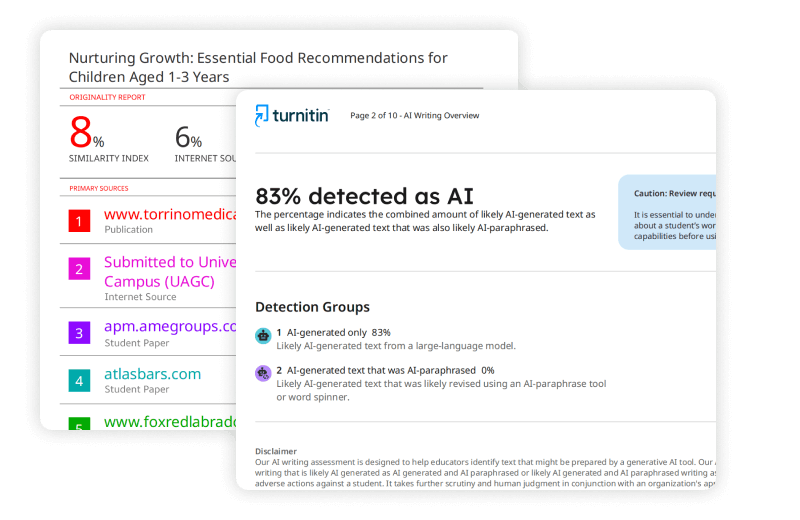
AI writing detection versus similarity scoring: Separate functions. Similarity scoring compares against existing database sources. AI detection analyzes linguistic patterns for machine-generation probability. A paper can show low similarity and high AI probability (original-seeming AI text) or high similarity and low AI probability (extensive human quotation). Both require human interpretation; neither provides definitive misconduct determination .